
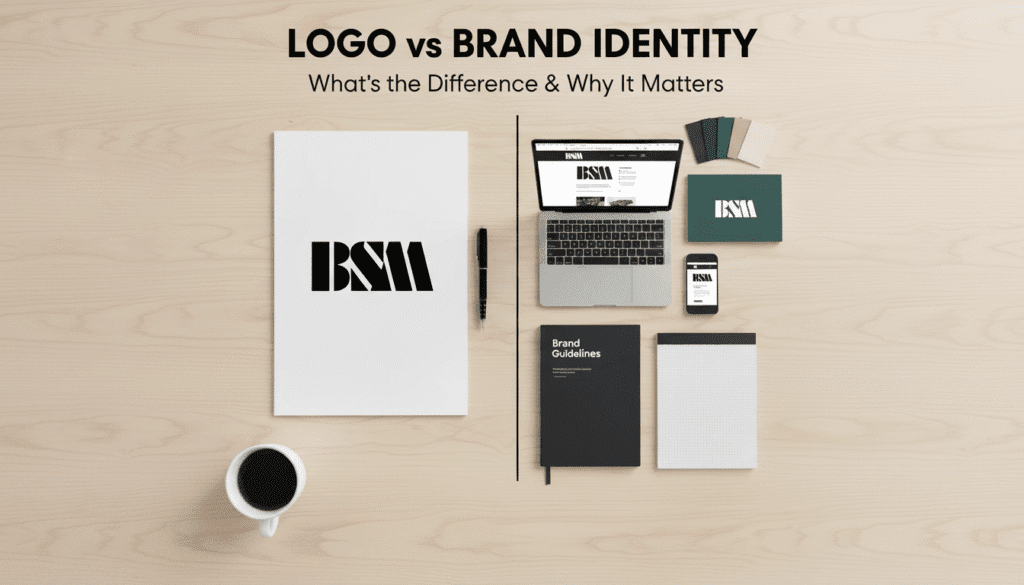
Logo vs Brand Identity: What’s the Difference & Why It Matters
Logo vs Brand Identity: The Complete Guide to Making Your Brand Stand Out Logo vs Brand Identity is one of the most misunderstood topics in the world of branding, especially among new businesses and growing startups. Many entrepreneurs assume that creating a beautiful logo is enough to establish a strong brand — but in reality, a logo is only a tiny part of a much bigger identity system. A brand is not built by a symbol alone; it is built by the emotions, experiences, visuals, consistency, and personality that customers associate with your business. The topic of Logo vs Brand Identity is essential for every business that wants to build a strong market presence. Understanding the difference between a logo and a complete brand identity is crucial because it directly affects how people perceive your business, trust your products, and remember your name. If businesses want to grow, differentiate themselves, and build long-term customer loyalty, they must look beyond just a logo. In this blog, we break down the real difference, explain why it matters, and show how investing in a strong brand identity can transform the entire way your audience sees your business. What is a logo in branding? A logo is a powerful visual symbol, but it represents only one part of your brand. It helps people recognize your business quickly, but it cannot communicate your full story. That is why branding goes far beyond just designing a logo. Your brand identity includes colors, fonts, tone, messaging, personality, and every experience your customer has with you. When both work together, your brand becomes stronger, clearer, and more memorable. What Is Brand Identity? (The Personality Behind the Business) HubSpot defines brand identity as the collection of tangible brand elements that make your company recognizable. A brand identity is the full set of elements that shape how people perceive your business — visually, emotionally, and experience-wise. It’s everything that makes your brand feel unique, trustworthy, and memorable. Brand identity includes: Your logo Brand colors Brand typography Imagery & design style Brand voice & tone Brand story Messaging & taglines Packaging & presentation Website style and layout Social media look and feel Customer experience A brand identity is your complete personality, not just one element. Logo vs Brand Identity: Key Differences Many small businesses confuse logo vs brand identity, but knowing the difference builds a stronger and more memorable brand. When we compare Logo vs Brand Identity, it becomes clear that branding goes far beyond just visual design. Aspect Logo Brand Identity Definition A visual mark or symbol representing a business. A complete system of visual, verbal, and emotional elements that shape brand perception. Purpose Identification — helps people recognize the brand. Communication — expresses personality, values, and experience. Scope Single design element. Multiple elements: colors, fonts, tone, messaging, style, experience, etc. Emotional Impact Limited emotional storytelling. Deep emotional connection that builds trust and loyalty. Longevity Can be updated or redesigned easily. Long-term foundation guiding all brand decisions. Consistency Level Represents the brand but does not ensure full consistency. Ensures coherence across all touchpoints—website, packaging, social media, etc. Customer Perception Shows “what you look like.” Shows “who you are” and “how you make customers feel.” Marketing Impact Helps with quick brand recognition. Enhances engagement, retention, loyalty, and conversions. Elements Included Icon, typography, and brand name styling. Logo + colors + fonts + voice + messaging + imagery + experience. Overall Role First impression. Complete brand experience. Importance of This Difference for Each Company Many startups misunderstand Logo vs Brand Identity, assuming that a logo alone represents the entire brand. A lot of companies will go for a pretty logo but will forget about the main thing — the establishment of a consistent and memorable identity. Let’s take a look at the reasons: Customer Trust Comes from Identity, Not Just a Logo Customers do not place their trust in a logo. They trust the values, tone, messaging and experience that are associated with it. Your Brand Identity Sets You Apart from Competitors Two companies can have the same logos. But what will make your brand unforgettable is the story, voice, design style, and customer experience that surround it. Consistency Leads to Recognition Consistency in visuals, colors, website, and communication will cause people to recognize you — even if your logo is not showing. Strong Identity Cultivates Loyalty People stick to brands they feel a connection with. Identity makes that connection, not just a design. It Increases Marketing’s Effectiveness A strong identity positively affects: Website traffic Social media activities SEO ranking Sales Brand awareness The debate of logo vs brand identity often arises when businesses start working on their visual presence. How to Construct a Robust Brand Identity (Not Just a Logo) A deeper look at logo vs brand identity reveals why both are essential for long-term brand success. Here is the main point that every company should take into consideration: Characterize the Personality of Your Brand Is it high-end? Approachable? Clean? Assertive? Your visual elements and tone must correlate with this character. Establish a Color Palette That Reinforces Your Narrative The colors you use will have a significant impact on people’s feelings and how they see the brand. Select a color scheme that resonates with the persona of your brand. Select the Right Fonts The choice of typefaces must convey the character of your brand — contemporary, timeless, playful, luxurious, and so on. Formulate Your Brand Voice & Messaging The style of communication should be the same in all places: Website Brochures Social media Customer support Make a Visual Style Guide This will make sure that everything — from posts to packages — has the same look. Tell Your Brand Story Stories are more memorable than products. Mention the reason for your existence and the problem you are addressing. Conduct Branded Experiences The different customer touchpoints such as packaging, customer service, and website journey should all be in line with your brand personality. Why a Logo and Brand Identity Are Important